GLP-1 Medications and Employee Benefits: What Employers Should Know

In the past two years, a new category of medications has become one of the most talked-about developments in healthcare.
Drugs like Ozempic, Wegovy, Mounjaro, Zepbound, Rybelsus, Saxenda, and Victoza (often referred to as GLP-1 medications) are transforming the way certain conditions are treated. They are also quickly becoming one of the most significant emerging conversations in group benefits planning.
For employers and benefits decision-makers, the questions are beginning to surface:
Are these medications covered?
Should they be covered?
How might they affect long-term benefit costs?
Understanding how these drugs fit into benefit plans is becoming increasingly important.
What Are GLP-1 Medications?
GLP-1 medications are a class of drugs originally developed to treat Type 2 diabetes.
They work by mimicking a hormone that helps regulate blood sugar levels and appetite. In many patients, these medications can also lead to significant weight loss.
Some of the most widely known medications in this category include:
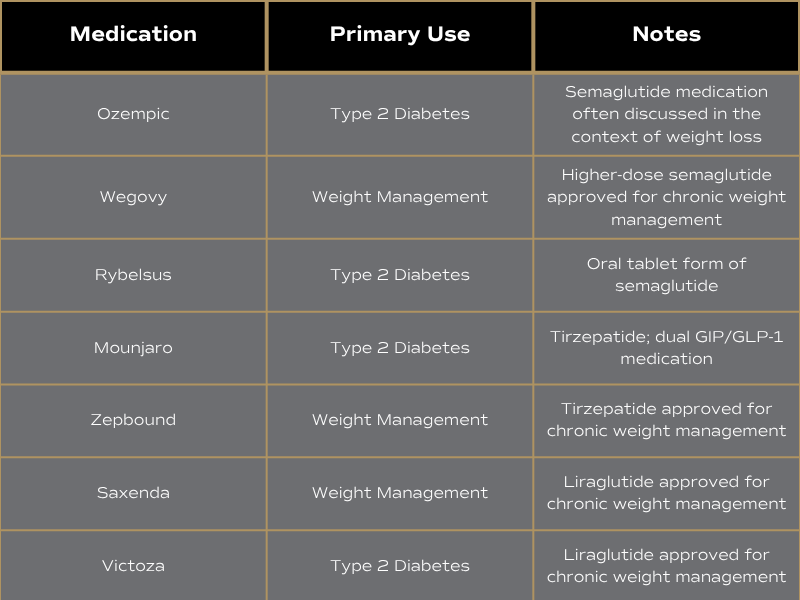
Because of their effectiveness, these medications are now being prescribed not only for diabetes management but also for chronic weight management in certain medical cases.
That shift is what's bringing them into the benefits conversation.
Why These Medications Are Becoming a Benefits Issue
GLP-1 medications can be expensive, often costing $300–$500+ per month depending on the drug and dosage.
As prescriptions increase, insurers and plan sponsors are being forced to make important decisions about coverage.
Some of the key considerations include:
medical necessity
long-term treatment expectations
plan sustainability
eligibility criteria for coverage
For employers sponsoring benefits plans, the question is not simply whether these medications exist, it’s how they should fit within a responsible benefits strategy.
What Is Currently Covered?
Coverage for GLP-1 medications varies widely depending on the structure of the benefit plan.
In many plans today:
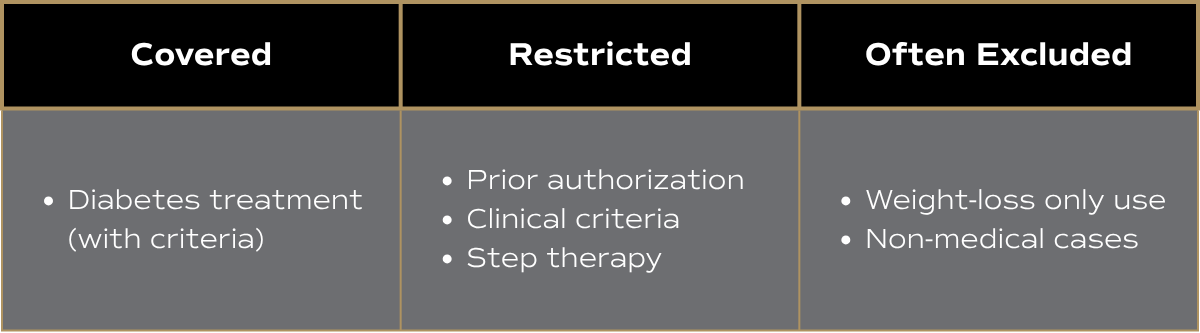
Diabetes treatment
Medications such as Ozempic may be covered when prescribed for Type 2 diabetes management.
Weight-management treatment
Coverage for weight-loss medications is much less consistent.
Many plans:
exclude weight-loss drugs entirely
restrict coverage to diabetes diagnoses
require prior authorization or clinical criteria
Because these medications are relatively new to widespread use, many insurers are still refining how they approach coverage.
How Insurers Typically Manage High-Cost Drugs
When new or high-cost medications enter the market, insurers rarely approach them with simple yes-or-no coverage decisions.
Instead, they often introduce management tools such as:
prior authorization to confirm medical necessity
clinical eligibility criteria
step therapy requirements
specialty drug programs
These mechanisms help ensure that medications are used appropriately while maintaining the long-term sustainability of the plan.
For employers, understanding how these tools work is an important part of responsible benefits governance.
What Employers Are Beginning to See
As awareness grows, employers are beginning to encounter new questions from employees about these medications.
At the same time, insurers are beginning to explore new forms of plan management, including:
prior authorization requirements
clinical eligibility criteria
specialty drug programs
managed formularies
These tools are designed to ensure that medications are used appropriately and sustainably within a group benefits plan.
The Strategic Question for Employers
For most organizations, the question is not simply whether GLP-1 medications exist.
The more important question is: How should emerging treatments fit into a responsible benefits strategy?
Employers are increasingly balancing several factors:
supporting employee health and well-being
maintaining equitable access to treatments
protecting long-term plan sustainability
adapting to an evolving healthcare landscape
As medical innovation continues to accelerate, thoughtful plan design will play an increasingly important role.
What’s Likely Coming Next
GLP-1 medications are not a short-term trend.
Many industry experts expect that they will play an increasing role in healthcare in the coming years.
This means employers may begin seeing:
increased employee awareness and requests
evolving insurer coverage policies
new clinical management guidelines
broader conversations about preventative health and chronic conditions
As the landscape evolves, thoughtful plan design will become increasingly important.
The Role of Benefits Strategy
Group benefits plans are built to support employees during important moments while remaining sustainable for the organizations that sponsor them.
Emerging treatments like GLP-1 medications highlight why careful plan governance and informed decision-making matter.
Understanding how new therapies affect both employee wellbeing and plan sustainability is becoming an important part of modern benefits consulting.
Final Thought
Healthcare innovation moves quickly.
Benefit plans must balance access, responsibility, and long-term sustainability.
For employers, staying informed and working with experienced advisors is the best way to navigate emerging issues like GLP-1 medications as they continue to evolve.